EPS Recycling Machine Guide and Overview: Learn How Foam Waste Is Processed and Recovered
EPS recycling machines are designed to handle expanded polystyrene foam waste from packaging, construction materials, appliances, and other applications. Because EPS contains a large amount of air relative to its polymer content, specialized equipment can reduce its volume and prepare the material for further recycling.
An EPS recycling machine guide helps explain how foam waste moves through collection, separation, size reduction, compaction, and material recovery stages. Understanding these processes can help businesses, recyclers, facility managers, and students learn how EPS waste management fits within broader circular-material systems.
Context
Expanded polystyrene, commonly called EPS, is a lightweight cellular plastic made from polystyrene beads. It is widely used for protective packaging, insulation, transport containers, cushioning materials, and molded products. Its low density makes it useful for protecting products, but it also means that large quantities of discarded EPS can occupy considerable storage and transportation space.
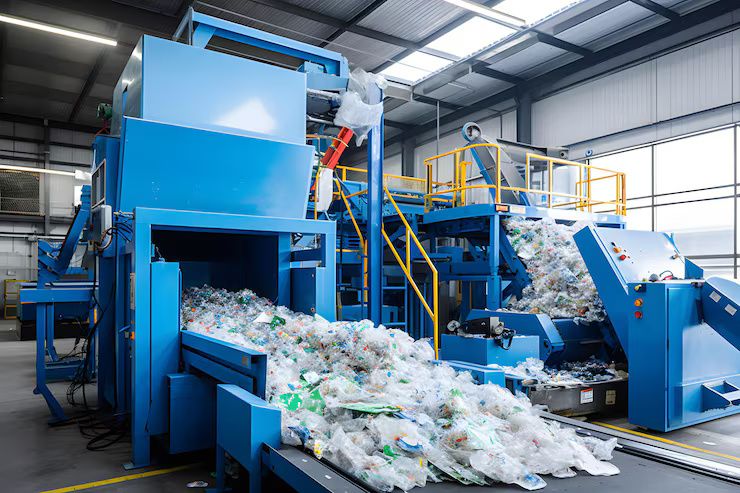
An EPS recycling machine processes this material so that its physical volume can be substantially reduced. Depending on the equipment configuration, the process may include shredding, crushing, heating, densification, or compaction.
A typical EPS recycling process can involve these stages:
- Collection of clean EPS foam
- Sorting and removal of unwanted materials
- Size reduction through crushing or shredding
- Densification or compaction
- Cooling and stabilization where applicable
- Formation of compacted material or recovered polymer
- Transfer for further material processing
Different machines use different technologies. Cold compactors mechanically compress foam without melting it, while thermal densifiers use controlled heat to reduce the foam into a denser polystyrene material. Some systems combine several stages into one processing line.
The purpose is not simply to reduce physical volume. Proper processing can help prepare recovered polystyrene for subsequent applications, depending on contamination levels, material quality, and the requirements of the next recycling stage.
| EPS processing stage | Main purpose | Typical consideration |
|---|---|---|
| Sorting | Separate EPS from unwanted materials | Contamination |
| Crushing | Reduce particle size | Feed consistency |
| Densification | Reduce foam volume | Density and heat control |
| Cooling | Stabilize processed material | Material condition |
| Storage | Keep recovered material organized | Moisture and contamination |
| Further processing | Prepare material for reuse in manufacturing | Quality specifications |
Importance
EPS recycling is important because foam waste is lightweight but physically bulky. Without volume reduction, transportation and storage can require substantial space. Densification changes the physical characteristics of the collected material and can make handling more practical.
The subject affects several groups, including packaging facilities, construction operations, logistics centers, recycling facilities, municipalities, and waste-management organizations.
Environmental considerations are another reason EPS recycling receives attention. Polystyrene is not biodegradable in the conventional sense, so discarded material can remain in the environment for long periods. Recycling and recovery systems can help keep suitable material within managed waste streams.
Machine selection also depends on the type of EPS being processed. Clean packaging foam may have different requirements from construction insulation or food-contact materials. Contaminated, mixed, or laminated foam can require additional separation before processing.
Important factors include:
- Material type and density
- Contamination level
- Expected processing volume
- Required output form
- Available electricity and space
- Dust and ventilation controls
- Operator safety procedures
- Storage conditions for recovered material
These factors should be evaluated according to the specific application rather than assuming that one EPS recycling machine configuration is appropriate for every facility.
Recent Updates
Recent developments in EPS recycling are increasingly connected with circular-economy policies, recycled-content requirements, material traceability, and improved sorting. In Europe, the Packaging and Packaging Waste Regulation began applying from 12 August 2026, establishing a common framework for packaging and packaging waste. The regulation includes requirements related to recyclability and recycled plastic content, with some recycled-content measures applying from 2030.
Research is also examining how EPS behaves when mechanically recycled repeatedly. A 2025 study discussed by EUMEPS examined ten consecutive mechanical recycling cycles using recycled EPS content and evaluated material performance under conditions aligned with the European packaging framework.
Technology development is also moving toward more connected waste-management systems. A 2026 research study examined the use of IoT sensing, machine learning, and blockchain for tracking polystyrene waste and improving information about collection and processing. This represents a research direction rather than a universal requirement for EPS recycling facilities.
The broader trend is toward better material identification, improved collection, higher recycling rates, and clearer tracking of recovered plastics.
Laws or Policies
EPS recycling requirements vary by country, state, municipality, and application. Organizations should therefore check the rules that apply to their specific location and material stream.
In India, plastic waste management is governed through the Plastic Waste Management Rules and subsequent amendments. The Ministry of Environment, Forest and Climate Change lists the Plastic Waste Management Rules and amendments through 2023 and 2024 on its rules and regulations portal.
India's plastic-waste framework includes Extended Producer Responsibility provisions for plastic packaging. The Central Pollution Control Board also maintains online systems and guidance connected with environmental compliance and waste-management activities.
In the European Union, the Single-Use Plastics Directive restricts certain single-use products made from expanded polystyrene, including specified food and beverage containers. These rules concern particular product categories and should not be interpreted as a general prohibition on every EPS material or recycling activity.
California also has specific requirements concerning EPS food-service ware, including recycling-rate provisions and related compliance information. CalRecycle publishes updates and guidance for regulated entities.
For compliance planning, facilities should check:
- National and regional plastic-waste regulations
- Extended Producer Responsibility requirements
- Local waste-handling rules
- Environmental permits where applicable
- Workplace safety requirements
- Requirements for transporting recovered materials
Tools and Resources
Reliable information is useful when evaluating EPS recycling processes and regulatory requirements. Government environmental agencies are generally appropriate starting points because rules can change over time.
Useful resources include:
- Ministry of Environment, Forest and Climate Change, India, for national environmental rules and notifications.
- Central Pollution Control Board for waste-management and EPR information in India.
- European Commission Environment pages for EU packaging and plastics regulations.
- CalRecycle for California-specific EPS requirements and compliance guidance.
A basic evaluation worksheet can record the following information:
| Evaluation area | Information to record |
|---|---|
| Feed material | Packaging, insulation, molded EPS, or mixed foam |
| Contamination | Clean, lightly contaminated, or mixed |
| Processing method | Crushing, compaction, or thermal densification |
| Output | Compacted foam or recovered polymer |
| Capacity | Expected material volume |
| Safety | Dust, heat, ventilation, and guarding requirements |
| Regulations | Applicable local and national rules |
These records can help facilities compare their actual waste stream with the technical and regulatory requirements of a recycling process.
FAQs
What is an EPS recycling machine?
An EPS recycling machine is equipment designed to process expanded polystyrene foam waste. Depending on the design, it may crush, compact, or thermally densify EPS to reduce its volume and prepare it for further material recovery.
How does EPS recycling work?
The process generally begins with collection and sorting. Suitable foam is then reduced in size and densified or compacted. The resulting material can be stored and transferred for additional recycling or polymer-processing steps.
Can all EPS foam be recycled in the same way?
No. EPS can vary in composition, density, contamination, additives, and application. Clean packaging foam, construction insulation, and mixed waste may require different handling and processing approaches.
Why is EPS densification important?
EPS has a very low bulk density because its structure contains substantial air. Densification reduces physical volume, which can simplify storage and handling and prepare the material for subsequent recycling stages.
What regulations apply to EPS recycling?
Requirements depend on location and material type. Plastic-waste regulations, EPR requirements, local waste rules, environmental permissions, and workplace safety requirements may all be relevant. Facilities should consult the applicable government authorities before establishing a recycling process.
Conclusion
An EPS recycling machine provides a way to process bulky expanded polystyrene foam through stages such as sorting, size reduction, compaction, and densification. The appropriate process depends on material characteristics, contamination, required output, facility conditions, and applicable regulations.
Recent developments show increasing attention to circular material systems, packaging recyclability, recycled content, and improved waste tracking. Regulations differ between jurisdictions, so technical planning should be combined with current environmental and safety requirements.
For organizations studying EPS recycling, understanding the complete material pathway is important. Collection quality, processing conditions, output specifications, and regulatory requirements all influence how an EPS recycling system functions.
Government environmental agencies and recognized regulatory portals provide useful sources for checking current requirements. Reviewing these resources regularly can help keep recycling practices aligned with changes in waste-management policy and packaging regulations.

Related Post...

Tyre Recycling Machines Introduction: Understanding Their Role in Tyre Recovery
Updated: September 11, 2026
Read More
Explore Different Pillar Drilling Machine Types and Their Industrial Uses
Updated: September 15, 2026
Read More
Explore Bioreactor Control Systems: Guide to Sensors, Automation, and Insights
Updated: September 12, 2026
Read More