Explore Advanced Materials Guide, Basics, and Key Information
Advanced materials are engineered substances designed to provide specific physical, chemical, electrical, thermal, or mechanical properties.
They are used in areas such as aerospace, electronics, energy, transportation, healthcare, construction, and industrial manufacturing. Understanding advanced materials helps explain how modern products achieve greater strength, lighter weight, improved durability, or specialized performance.
The field includes many material groups, including composites, ceramics, polymers, nanomaterials, smart materials, and high-performance metals. Their development combines chemistry, physics, engineering, and manufacturing knowledge. This advanced materials guide explains the basics, importance, recent developments, relevant policies, and useful resources in simple terms.
Context
Advanced materials are materials developed or modified to achieve properties beyond those normally associated with conventional materials. The term covers a broad range of substances rather than one specific material family.
Traditional materials such as steel, aluminum, glass, and basic plastics remain important. Advanced materials build on these foundations by changing their composition, structure, processing method, or surface characteristics.
Examples include:
- Carbon-fiber-reinforced composites designed for high strength with relatively low weight
- Advanced ceramics designed for high-temperature or wear-resistant applications
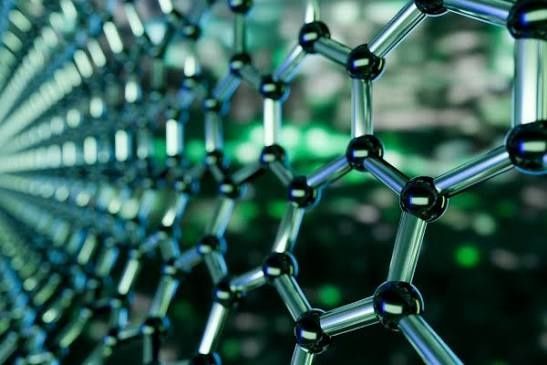
- Nanomaterials with properties influenced by structures at very small scales
- Shape-memory materials that respond to temperature or mechanical conditions
- High-performance polymers designed for demanding chemical or thermal environments
- Advanced battery materials used in energy-storage technologies
The development process often involves several stages. Researchers first identify a required property, such as heat resistance or electrical conductivity. They then study material composition and structure, followed by laboratory testing, processing, and performance evaluation.
Material properties can depend heavily on manufacturing conditions. Temperature, pressure, cooling rate, particle size, additives, and surface treatment may all influence the final result. For this reason, advanced materials research usually connects material science with engineering and manufacturing disciplines.
Importance
Advanced materials matter because material properties directly influence the performance, efficiency, reliability, and lifespan of many technologies. A lighter structural material, for example, can reduce the mass of an aircraft or vehicle. A material with better thermal stability can support equipment operating under demanding temperatures.
Different industries have different material requirements.
| Sector | Material Requirement | Example Application |
|---|---|---|
| Aerospace | Low weight and high strength | Aircraft structures |
| Electronics | Electrical and thermal performance | Semiconductor components |
| Energy | Conductivity and durability | Batteries and fuel systems |
| Healthcare | Biocompatibility and strength | Medical devices |
| Transportation | Lightweight and wear resistance | Vehicle components |
| Construction | Durability and structural performance | Advanced building materials |
Advanced materials can also contribute to resource efficiency. Longer-lasting components may require fewer replacements, while lightweight materials can help reduce energy use in transportation.
The field affects researchers, engineers, manufacturers, regulators, educators, and technology developers. It also has broader implications for infrastructure, environmental management, energy systems, and national research programs.
However, advanced materials are not automatically better in every situation. A material may have excellent strength but be difficult to process or recycle. Another material may provide useful electrical properties while requiring careful handling during production. Selecting an appropriate material therefore requires consideration of performance, safety, environmental factors, manufacturing requirements, and the intended application.
Recent Updates
Advanced materials research continues to develop rapidly. Between 2024 and 2026, several areas have received significant attention across research institutions and industrial laboratories.
One important area is materials for energy storage. Researchers continue to investigate lithium-ion battery improvements, solid-state battery materials, sodium-ion systems, silicon-based anodes, and other approaches intended to improve energy density, durability, safety, and resource availability.
Another major area is additive manufacturing. Advanced materials designed for 3D printing are being studied for aerospace components, medical structures, tooling, and complex engineering parts. Researchers are working to understand how printing parameters influence strength, defects, surface characteristics, and long-term performance.
Nanotechnology also remains an important part of advanced materials research. Nanostructured materials can display properties that differ from the same substances at larger scales. Research includes nanoscale coatings, sensors, catalysts, electronics, and energy technologies.
Artificial intelligence and computational materials science are increasingly being used to identify promising material compositions and predict properties. These methods can reduce the number of physical experiments required during early research, although laboratory validation remains essential.
Other active research directions include:
- Materials designed for extreme temperatures
- Recyclable and lower-impact composites
- Advanced semiconductor materials
- Materials for hydrogen-related technologies
- Bio-based and biodegradable material systems
- High-performance coatings
- Materials for quantum technologies
- Smart materials with responsive properties
A growing focus is also being placed on material circularity. Researchers are examining how advanced materials can be designed with recovery, reuse, recycling, and reduced environmental impact in mind.
Laws or Policies
Advanced materials are affected by different laws and policies depending on the material, application, manufacturing process, and country. There is no single worldwide regulation covering every advanced material.
Chemical substances may be subject to rules concerning classification, exposure, handling, transportation, environmental release, and waste management. Nanomaterials can receive additional attention because their behavior may differ from larger forms of the same substance.
In the European Union, the REACH framework regulates the registration, evaluation, authorization, and restriction of many chemical substances. The European Chemicals Agency provides technical information and regulatory guidance.
In the United States, materials involving chemical substances may fall under federal environmental and workplace regulations. The Environmental Protection Agency and Occupational Safety and Health Administration are among the organizations involved in relevant areas.
In India, advanced materials may be affected by environmental, workplace safety, chemical management, waste management, and product-specific regulations. Requirements can differ according to the material and its intended application.
Organizations working with advanced materials should consider:
- Applicable chemical and environmental regulations
- Workplace exposure and laboratory safety requirements
- Transportation and storage rules
- Waste handling requirements
- Product-specific technical standards
- Testing, certification, and documentation requirements
Because regulations change and differ between jurisdictions, official government and regulatory sources should be checked before making compliance decisions.
Tools and Resources
Several resources can help people learn about advanced materials and investigate material properties.
The National Institute of Standards and Technology provides scientific data, measurement information, and materials-related research resources. Academic databases such as Google Scholar can help locate peer-reviewed research papers and technical studies.
Materials databases are particularly useful for comparing characteristics such as density, strength, thermal conductivity, electrical properties, and chemical behavior. Engineering software can also support material selection, simulation, finite-element analysis, and process modeling.
Useful resource categories include:
- Materials property databases
- Scientific research journals
- Government research laboratories
- Engineering standards organizations
- University materials science departments
- Computational modeling platforms
- Technical handbooks and reference guides
When using a materials database, it is important to check the measurement conditions. Values can vary according to temperature, manufacturing method, specimen structure, testing procedure, and material grade.
FAQs
What are advanced materials?
Advanced materials are engineered or specially developed materials with properties suited to demanding or specialized applications. They include composites, advanced ceramics, high-performance polymers, nanomaterials, smart materials, and specialized metals.
What are advanced materials used for?
They are used in aerospace, electronics, energy, healthcare, transportation, construction, communications, and industrial technologies. Their specific purpose depends on their physical and chemical properties.
Why are composites considered advanced materials?
Many composites combine two or more different material phases to achieve a useful combination of properties. For example, fiber-reinforced composites can provide high strength and stiffness while maintaining relatively low density.
How is nanotechnology connected to advanced materials?
Nanotechnology focuses on structures and materials at extremely small scales. Changing material structure at the nanoscale can influence characteristics such as strength, conductivity, optical behavior, chemical reactivity, and surface properties.
How can someone learn more about advanced materials?
A good starting point is basic materials science, followed by topics such as polymers, metals, ceramics, composites, nanotechnology, and material characterization. Scientific journals, university resources, government laboratories, and materials databases can provide additional information.
Conclusion
Advanced materials are an important part of modern science and engineering because they enable specific combinations of strength, weight, conductivity, thermal stability, durability, and other properties. Their applications extend across many fields, from transportation and electronics to energy and healthcare.
Understanding advanced materials requires more than knowing their names. Material structure, processing, testing, environmental considerations, and regulatory requirements all influence how a material performs in a real application.
As research progresses, advanced materials are increasingly connected with artificial intelligence, additive manufacturing, energy storage, nanotechnology, and sustainable material development. These developments are expanding the range of properties that researchers can investigate.
For anyone beginning to explore the field, learning the basic relationship between material structure, properties, processing, and performance provides a useful foundation. Reliable scientific databases, government resources, technical standards, and peer-reviewed research can then help build deeper knowledge.

Related Post...


PayPal Business Introduction to Payment Processing and Business Account Features
Updated: October 20, 2026
Read More
Learn Industrial Manufacturing: Guide to Processes and Technology
Updated: August 12, 2026
Read More