Granulation Equipment Tips: Explore Efficient Processes and Important Equipment Features
Granulation is an important processing step used to convert fine powders into larger, more manageable particles. Granulation equipment can help improve powder flow, reduce segregation, support consistent material handling, and prepare materials for later processing. Different industries use different granulation methods depending on material properties and process requirements.
Granulation equipment tips are useful when evaluating process conditions, equipment features, cleaning needs, and operating controls. Understanding these factors can help operators, engineers, quality teams, and students recognize how granulation systems work and what characteristics can influence process consistency.
Context
Granulation is the process of forming larger particles, called granules, from smaller particles. It can be performed through wet granulation, dry granulation, or other specialized approaches. The selected method depends on properties such as particle size, moisture sensitivity, compressibility, density, and flow behavior.
In pharmaceutical manufacturing, granulation is commonly associated with tablet and capsule production. Other applications can include food processing, fertilizers, chemicals, ceramics, detergents, and various powdered materials.
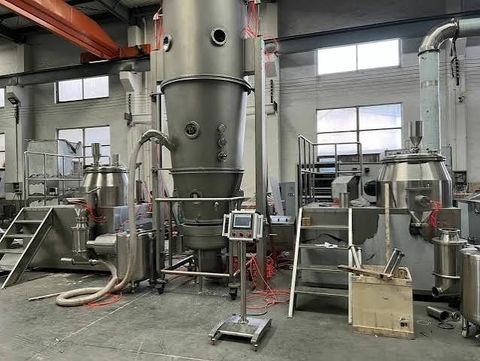
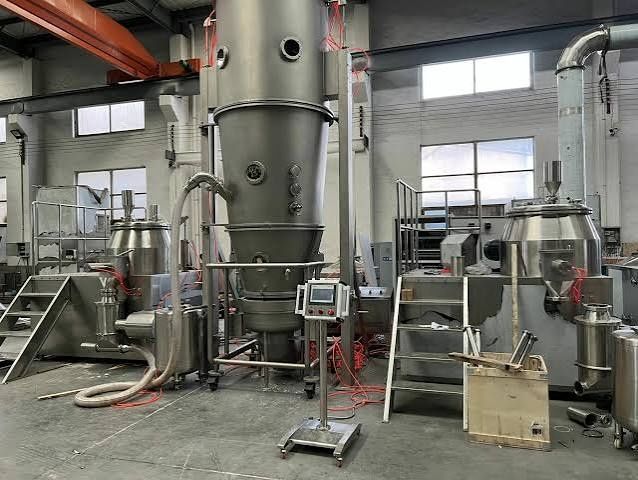
Common granulation equipment includes high-shear granulators, fluid-bed granulators, roller compactors, oscillating granulators, and related milling or screening equipment. A complete process may involve several stages rather than one machine alone.
| Equipment type | General purpose | Important considerations |
|---|---|---|
| High-shear granulator | Rapid mixing and wet granulation | Mixing intensity, moisture, batch size |
| Fluid-bed granulator | Granulation and drying | Airflow, temperature, humidity |
| Roller compactor | Dry granulation | Roll pressure, feed rate, ribbon density |
| Oscillating granulator | Particle size reduction | Screen size, speed, material properties |
| Mill or sieve | Size control | Screen selection, particle distribution |
A well-planned process considers the relationship between material characteristics, equipment settings, environmental conditions, and the desired granule properties.
Importance
Granulation can influence powder flow, density, particle-size distribution, compressibility, and downstream processing. In pharmaceutical applications, these characteristics can affect subsequent compression and dosage-form consistency.
Several equipment features deserve attention during process planning:
- Appropriate working capacity for the intended batch
- Controlled mixing or compaction conditions
- Suitable product-contact materials
- Accessible surfaces for cleaning and inspection
- Appropriate temperature and moisture monitoring
- Dust-control provisions where powders create airborne particles
- Measurement and recording of important process parameters
Process controls should be based on the material and intended application rather than simply on equipment specifications. For example, wet granulation may require careful control of liquid addition and drying, while dry granulation can require attention to compaction force and ribbon characteristics.
Equipment design is also important for maintenance and contamination control. FDA guidance states that pharmaceutical manufacturing equipment should be appropriately designed for its intended use and for cleaning and maintenance. Product-contact surfaces should not adversely affect product quality.
Recent Updates
Recent developments in granulation increasingly focus on process monitoring, automation, data collection, and better control of critical process parameters. Sensors and automated controls can monitor variables such as temperature, pressure, airflow, moisture, and equipment load.
Process analytical technology can also support more continuous observation of material characteristics. Data from sensors may help identify changes during processing and provide information for process development and quality evaluation.
Another development is greater attention to equipment flexibility and cleaning. Systems designed with accessible product-contact areas can simplify inspection and reduce the difficulty of cleaning between batches.
Continuous manufacturing is another area of technical development. Instead of processing individual large batches through separate stages, integrated systems can connect material feeding, granulation, drying, milling, and other operations. The suitability of continuous processing depends on the material, application, regulatory requirements, and process-control strategy.
For pharmaceutical manufacturing, qualification and validation remain important considerations. The European Medicines Agency reported in 2026 that a revision of GMP Annex 15 concerning qualification and validation had entered the consultation process, with the proposed changes addressing areas including active-substance manufacturing and quality-risk management.
Laws or Policies
Granulation equipment requirements depend on the industry, material, country, and intended application. Pharmaceutical manufacturing is subject to specific GMP requirements in many jurisdictions.
In the United States, pharmaceutical manufacturers are subject to Current Good Manufacturing Practice requirements under 21 CFR Parts 210 and 211. FDA explains that these rules establish minimum requirements for manufacturing methods, facilities, and controls.
FDA requirements also address equipment design, construction, cleaning, maintenance, and suitability for intended use. Equipment used in pharmaceutical processing should be maintained and cleaned at appropriate intervals, while product-contact surfaces must not adversely affect the safety, identity, strength, quality, or purity of the product.
For pharmaceutical operations in India, Schedule M provides GMP requirements for manufacturing facilities and processes. Its requirements for oral solid dosage forms specifically recognize dust-control and cross-contamination concerns associated with processing dry materials and products.
Regulatory expectations can also include equipment records, cleaning documentation, maintenance records, calibration, process validation, and appropriate environmental controls. CDSCO inspection guidance, for example, addresses records for equipment use, cleaning, sanitization, sterilization, and maintenance in applicable pharmaceutical manufacturing environments.
Organizations should consult the current regulations of the jurisdiction where the manufacturing activity takes place because requirements vary by product and application.
Tools and Resources
Useful resources can help users understand granulation processes and evaluate equipment-related requirements.
- FDA CGMP resources for pharmaceutical manufacturing requirements and equipment guidance
- European Medicines Agency GMP resources for qualification and validation information
- CDSCO and Schedule M documents for applicable Indian pharmaceutical requirements
- Process flow diagrams for documenting granulation stages
- Equipment qualification checklists for installation and operational reviews
- Cleaning and maintenance records for documenting equipment condition
- Process-monitoring logs for recording temperature, moisture, pressure, airflow, and other relevant parameters
A basic equipment review can compare intended material, process method, capacity, operating range, cleaning requirements, monitoring points, and documentation needs. This approach provides a structured way to identify technical requirements before implementation.
For pharmaceutical applications, FDA also notes that there is no general FDA list of approved drug-manufacturing equipment. Manufacturers are responsible for selecting equipment that meets applicable CGMP requirements and is appropriate for its intended use.
FAQs
What is granulation equipment?
Granulation equipment is machinery used to convert powders or fine particles into larger granules. The equipment and method depend on material properties and the intended downstream process.
What are common types of granulation equipment?
Common types include high-shear granulators, fluid-bed granulators, roller compactors, oscillating granulators, mills, and screening systems. Each type performs a different function within the overall process.
Why is moisture control important?
Moisture can affect granule formation, drying behavior, flow properties, and final particle characteristics. Excessive or insufficient moisture can change the performance of a granulation process.
What equipment features should be considered?
Important features can include capacity, mixing or compaction control, temperature and moisture monitoring, cleaning accessibility, product-contact materials, dust control, and data recording capabilities.
Does pharmaceutical granulation require validation?
Pharmaceutical manufacturing may require qualification and validation activities depending on the process and applicable regulations. FDA CGMP requirements include process and equipment controls, while European GMP frameworks address qualification and validation principles.
Conclusion
Granulation equipment plays an important role in converting powders into controlled granules for downstream processing. Understanding equipment types, process parameters, cleaning considerations, monitoring systems, and regulatory requirements can help users evaluate granulation processes more systematically.
Efficient processing depends on matching the granulation method with material characteristics and production requirements. Regular monitoring, suitable documentation, appropriate maintenance, and applicable quality controls are important parts of a controlled process.
Granulation equipment continues to develop through automation, improved monitoring, process data collection, and integrated manufacturing approaches. These developments can provide additional information for understanding and controlling process conditions.
For regulated pharmaceutical applications, users should always consult the current requirements of the relevant regulatory authority and maintain appropriate qualification, validation, cleaning, and equipment records.

Related Post...

Tyre Recycling Machines Introduction: Understanding Their Role in Tyre Recovery
Updated: September 11, 2026
Read More
Pharmaceutical Machinery Guide to Production Equipment, Systems and Processes
Updated: September 12, 2026
Read More
Explore Bioreactor Control Systems: Guide to Sensors, Automation, and Insights
Updated: September 12, 2026
Read More