Industrial Vacuum Pumps: Explore Working Principles, Designs, and Industry Uses
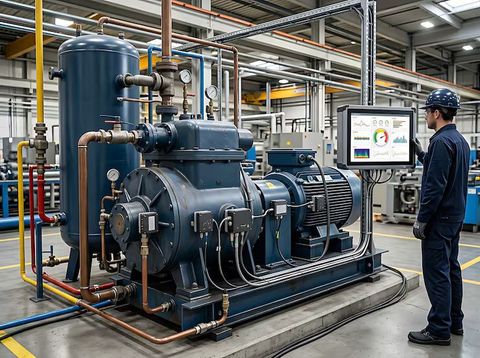
Industrial vacuum pumps are mechanical devices designed to remove gases and vapors from an enclosed space, creating a pressure lower than atmospheric pressure. They are used in manufacturing, chemical processing, food production, pharmaceuticals, electronics, packaging, and many other industrial environments.
Understanding industrial vacuum pumps involves looking at their working principles, pump designs, operating ranges, maintenance requirements, and industry uses. The right selection depends on factors such as required vacuum level, gas composition, flow rate, temperature, and operating conditions.
Context
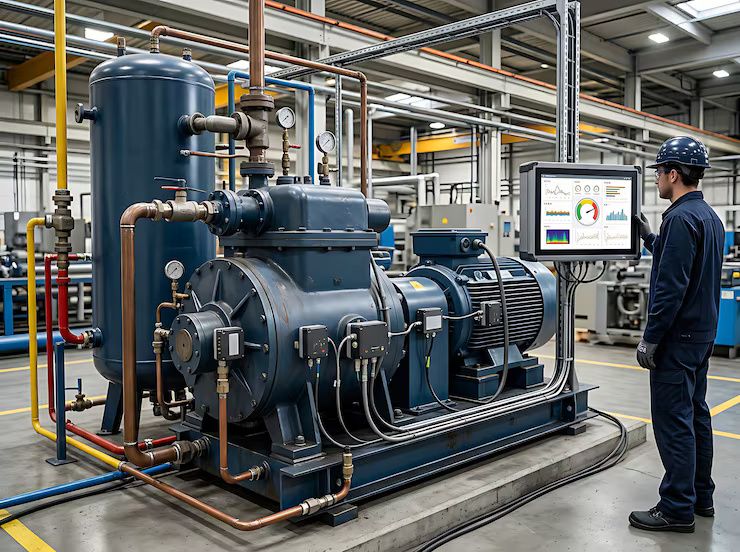
An industrial vacuum pump removes gas molecules from a chamber or process system. As gas is continuously removed, the pressure inside the chamber decreases. Depending on the pump design, the removed gas may be transferred mechanically, compressed, condensed, or captured.
Vacuum pumps differ from ordinary air compressors because their primary purpose is to reduce pressure rather than increase the pressure of a gas for downstream use. Industrial systems may use one pump or several pumping stages to achieve the required vacuum level.
Common industrial vacuum pump designs include:
| Pump type | Basic principle | Common applications |
|---|---|---|
| Rotary vane | Rotating vanes trap and compress gas | Packaging, laboratory processes |
| Dry screw | Rotating screws move gas without operating oil in the chamber | Chemical and food processing |
| Liquid ring | Rotating liquid forms sealing chambers | Wet and vapor-heavy processes |
| Diaphragm | Flexible diaphragm moves gas through valves | Chemical and laboratory applications |
| Roots blower | Rotors transfer large gas volumes | Vacuum boosting and industrial processing |
| Diffusion pump | High-speed vapor jets transfer gas molecules | High-vacuum applications |
Vacuum systems are often described by pressure ranges, such as low, medium, high, and ultra-high vacuum. The terminology and exact pressure boundaries can vary between technical standards and industries.
Importance
Industrial vacuum pumps can influence production efficiency, product quality, equipment operation, and process control. A stable vacuum can be important when atmospheric pressure would interfere with a particular manufacturing or processing step.
For example, vacuum technology can help remove air from packaging, evaporate moisture at lower temperatures, hold components during automated manufacturing, or create controlled conditions for coating and treatment processes.
Industries using vacuum systems include:
- Food and beverage processing
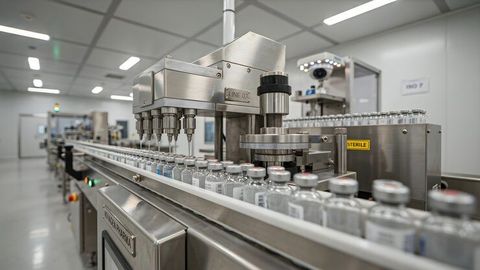
- Pharmaceutical manufacturing
- Chemical processing
- Semiconductor and electronics production
- Plastics and packaging
- Metallurgy
- Paper and pulp processing
- Automotive manufacturing
- Vacuum coating
- Industrial research and testing
Pump selection also affects energy consumption and maintenance requirements. A pump designed for dry gases may not be appropriate for processes containing substantial liquid vapor, while a system exposed to corrosive gases may require compatible construction materials.
Recent Updates
Recent developments in industrial vacuum technology have focused on energy efficiency, digital monitoring, dry operation, and improved process control.
Dry-running pump designs are increasingly relevant in applications where contamination from operating fluids must be minimized. Dry screw, claw, and scroll technologies can operate without oil entering the compression chamber, although individual designs differ in their operating characteristics and maintenance requirements.
Variable-speed drives are another important development. Instead of operating continuously at a fixed speed, a pump can adjust its speed according to process demand. This can help reduce unnecessary energy consumption when full pumping capacity is not required.
Digital monitoring is also becoming more common. Sensors can track parameters such as:
- Pressure
- Temperature
- Motor load
- Vibration
- Operating hours
- Pump performance
These measurements can support condition-based maintenance and help identify abnormal operating conditions before they cause process interruptions.
Heat management and material compatibility remain important areas of development, particularly for chemical and semiconductor applications where gases can be corrosive, reactive, or difficult to handle.
Laws or Policies
Industrial vacuum systems can be affected by workplace safety, environmental, electrical, pressure-system, chemical-handling, and machinery requirements. The exact rules depend on the country, industry, installation, and substances being processed.
In the United States, organizations such as OSHA and the Environmental Protection Agency establish requirements that may apply to particular industrial processes. OSHA requirements can address machine safety, hazardous substances, electrical systems, and workplace exposure.
International operations may also refer to standards developed by organizations such as ISO and IEC. Vacuum technology itself includes specialized terminology and measurement standards, while electrical equipment can be subject to separate requirements.
In India, industrial facilities may need to consider applicable occupational safety, environmental, electrical, factory, and pressure-related requirements at national and state levels. Requirements can vary according to the facility and process.
Before installing or modifying an industrial vacuum system, organizations should check the regulations applicable to their location and process. Particular attention is necessary when the system handles flammable, toxic, corrosive, or environmentally regulated substances.
Tools and Resources
Several technical resources can help engineers and operators understand vacuum systems and select appropriate equipment.
Vacuum pressure gauges are used to monitor the pressure inside a system. Different gauge technologies are suitable for different pressure ranges.
Vacuum calculators can assist with basic calculations involving pressure, pumping speed, gas volume, and evacuation time. However, real systems may behave differently because of leaks, conductance limitations, outgassing, temperature, and vapor loads.
Useful resources include:
- Manufacturer technical manuals and pump curves
- Vacuum pressure conversion calculators
- ISO vacuum terminology and measurement standards
- Occupational safety guidance
- Equipment maintenance records
- Process flow diagrams
- Leak-testing procedures
- Pump performance data sheets
Basic Selection Factors
Before selecting an industrial vacuum pump, engineers commonly evaluate:
- Required ultimate pressure
- Required pumping speed
- Gas and vapor composition
- Operating temperature
- Continuous or intermittent operation
- Chemical compatibility
- Moisture and particle levels
- Available electrical supply
- Noise and environmental requirements
- Maintenance and contamination considerations
Pumping speed is normally expressed as volume per unit of time, while pressure indicates the vacuum level achieved. Both values need to be considered together rather than treating a single specification as sufficient.
FAQs
What is an industrial vacuum pump?
An industrial vacuum pump is a mechanical device that removes gases or vapors from an enclosed system to create pressure below atmospheric pressure. Different pump designs are suited to different pressure ranges and process conditions.
How do industrial vacuum pumps work?
The basic process involves capturing gas molecules and moving them away from a vacuum chamber. Depending on the technology, the gas can be mechanically compressed, displaced, transferred, or captured.
Which industries use vacuum pumps?
Vacuum pumps are used in food processing, pharmaceuticals, chemicals, packaging, electronics, metallurgy, plastics, automotive manufacturing, research, and several other industrial fields.
What is the difference between dry and oil-sealed vacuum pumps?
Dry pumps do not use operating oil in the gas-handling chamber, while oil-sealed designs use oil for sealing, lubrication, or cooling. The appropriate design depends on the process and contamination requirements.
How can vacuum pump performance be monitored?
Performance can be monitored using pressure measurements, pumping-speed data, temperature readings, vibration monitoring, motor parameters, and maintenance records. Changes from normal operating conditions can indicate a need for inspection.
Conclusion
Industrial vacuum pumps are important components in processes where controlled low pressure is required. Their working principles and designs vary considerably, from rotary vane and liquid-ring pumps to dry screw, diaphragm, Roots, and high-vacuum technologies.
Choosing an appropriate system requires consideration of pressure requirements, pumping speed, gas composition, temperature, moisture, chemical compatibility, energy use, and applicable safety requirements. Understanding these factors helps organizations design and operate vacuum systems according to their specific process conditions.
Industrial vacuum technology continues to develop through dry-running designs, variable-speed operation, digital monitoring, and improved process control. Technical standards, manufacturer documentation, and applicable regulations remain important resources for safe and effective vacuum-system planning.

Related Post...
Paper Recycling Machines Help: Learn How Collection and Processing Systems Work
Updated: September 22, 2026
Read More
EPS Recycling Machine Guide and Overview: Learn How Foam Waste Is Processed and Recovered
Updated: September 18, 2026
Read More
Explore Bioreactor Control Systems: Guide to Sensors, Automation, and Insights
Updated: September 12, 2026
Read More