Machining Center Insights into Advanced Manufacturing Technology and Industrial Automation
A machining center is an important part of modern manufacturing technology. It uses computer-controlled systems and specialized cutting tools to shape materials such as metal, plastic, and certain composites into precise components.
Machining centers are widely used in automotive production, aerospace engineering, medical equipment manufacturing, electronics, and industrial machinery.
Understanding machining center technology provides useful insights into industrial automation, precision engineering, and advanced production methods. By combining computer numerical control (CNC), automatic tool changing, digital monitoring, and programmed machining operations, these systems help manufacturers maintain consistent quality and manage complex production tasks.
Context – Understanding Machining Center Technology
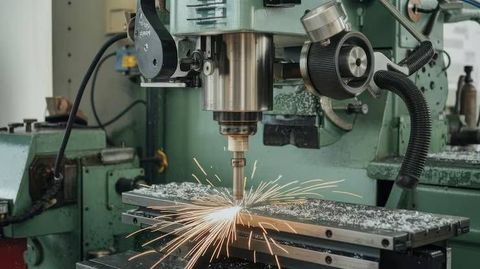
A machining center is a machine tool designed to perform multiple machining operations, often within a single setup. Depending on its configuration, it can perform milling, drilling, tapping, boring, and other material-removal operations. CNC technology controls the movement of the cutting tool, workpiece, and machine axes according to programmed instructions.
Traditional machine tools often require operators to change tools and reposition components manually between operations. A modern machining center can automate many of these activities through an automatic tool changer, programmable movements, and integrated control systems. This reduces repeated setup work and supports consistent component production.
Machining centers are generally classified by their axis configuration and spindle orientation. The two common types are vertical machining centers and horizontal machining centers.
Machining center type | Main characteristics | Common applications |
|---|---|---|
Vertical machining center | Spindle is positioned vertically | Molds, plates, brackets, and general components |
Horizontal machining center | Spindle is positioned horizontally | Complex housings, heavy components, and multi-sided machining |
Five-axis machining center | Supports coordinated movement across five axes | Aerospace parts, turbine components, and complex surfaces |
Mill-turn machining center | Combines milling and turning capabilities | Shafts, precision fittings, and cylindrical components |
The appropriate configuration depends on component geometry, material properties, required tolerances, production volume, and the number of operations involved.
Importance – Why Machining Centers Matter
Machining centers contribute to manufacturing accuracy, repeatability, and production planning. Their ability to perform several operations in one setup can reduce handling requirements and improve alignment between machined features.
Precision is especially important in industries where components must fit together correctly or operate under demanding conditions. Aerospace components, automotive transmission parts, medical instruments, and industrial equipment often require carefully controlled dimensions and surface finishes.
Machining centers also support industrial automation by connecting mechanical operations with digital control systems. Operators can use programmed tool paths and predefined cutting parameters to repeat production processes while monitoring machine performance.
Their importance extends to several areas:
Production consistency: CNC programs help maintain repeatable machining procedures.
Operational efficiency: Automatic tool changing can reduce interruptions between operations.
Material utilization: Accurate programming and tool-path planning can help reduce unnecessary material removal.
Product complexity: Multi-axis machining supports intricate shapes and angled features.
Production monitoring: Sensors and control systems can provide information about machine status and operating conditions.
Machining center technology affects machine operators, manufacturing engineers, maintenance technicians, quality-control teams, and production planners. Each group contributes to safe operation, component accuracy, and reliable production schedules.
However, automation does not eliminate the need for human expertise. Correct programming, workpiece setup, tool selection, inspection, and maintenance remain essential.
Recent Updates – Trends in Advanced Manufacturing
Machining center technology continues to develop alongside digital manufacturing, industrial automation, and smart factory systems. Recent industry developments emphasize improved monitoring, better process control, and greater integration between machines and manufacturing software.
One important trend is the use of industrial sensors to monitor vibration, temperature, spindle conditions, and cutting loads. These measurements can help identify unusual operating conditions before they cause serious production interruptions. Predictive maintenance systems analyze equipment data to support maintenance planning.
Another development is the integration of machining centers with manufacturing execution systems (MES). These systems help coordinate production schedules, collect operational data, and track work orders across manufacturing facilities.
Digital twins are also gaining attention in advanced manufacturing. A digital twin is a digital representation of a physical asset or process that can be used to study performance, test operating scenarios, and evaluate possible improvements. Its usefulness depends on the quality of the underlying data and the accuracy of the model.
Artificial intelligence and machine learning can support selected manufacturing tasks, including tool-wear estimation, defect detection, and process optimization. These applications require appropriate data, validation, and oversight rather than automatic reliance on algorithmic predictions.
Other developments include:
High-speed machining for selected materials and component geometries.
Automated workpiece loading through robotic systems.
Improved tool-path simulation to identify potential collisions before machining.
Energy monitoring to understand machine electricity consumption.
Network connectivity for collecting production information across equipment.
These technologies can improve visibility into manufacturing operations, but their results vary according to machine capability, implementation quality, material, and production requirements.
Laws or Policies – Manufacturing Safety and Compliance
Machining centers operate within workplace safety, environmental, and product-quality requirements. Applicable rules depend on the country, industry, machine configuration, and materials being processed.
In the United States, the Occupational Safety and Health Administration (OSHA) establishes workplace requirements relevant to machine guarding, hazardous energy control, and employee safety. OSHA's lockout/tagout standard, 29 CFR 1910.147, addresses the control of hazardous energy during certain servicing and maintenance activities.
Machine operators and maintenance teams should follow appropriate procedures for isolating electrical, pneumatic, hydraulic, and mechanical energy before performing covered maintenance work. Emergency stops and interlocks are important safeguards, but they do not replace required energy-isolation procedures.
In India, manufacturing facilities must consider applicable occupational safety requirements, including relevant provisions of the Occupational Safety, Health and Working Conditions Code, 2020, and associated rules and implementation requirements. The applicable legal framework should be verified for the particular workplace and jurisdiction.
Environmental requirements may also apply to metalworking fluids, waste handling, emissions, and industrial energy use. Facilities should identify the rules relevant to their processes and location.
International standards can provide additional guidance:
ISO 12100 addresses machinery safety principles and risk assessment.
ISO 13849-1 addresses safety-related parts of control systems.
ISO 9001 provides a framework for quality management systems.
Standards may be voluntary or become applicable through regulations, contracts, or other requirements. Organizations should verify the current edition and applicability before using a standard as a compliance reference.
Tools and Resources – Learning and Operating Machining Centers
Reliable technical resources help manufacturing teams understand machine capabilities, programming practices, maintenance requirements, and safety procedures.
Machine manufacturers publish operating manuals, programming references, maintenance schedules, and technical specifications. These documents are important because control functions, tool-changing procedures, and safety requirements differ between models.
Computer-aided manufacturing (CAM) software is used to create tool paths from component designs. Simulation tools can help engineers evaluate cutting sequences, machine movements, and potential collisions before a program is executed on the actual equipment.
Useful resources include:
National Institute of Standards and Technology (NIST): Research on advanced manufacturing, measurement, and industrial technology.
OSHA: Workplace safety standards and machine-guarding guidance for applicable US workplaces.
International Organization for Standardization (ISO): Information about machinery safety and quality management standards.
Autodesk Fusion documentation: Learning resources covering CAD, CAM, tool paths, and machining simulation.
Machine-specific CNC documentation: Instructions for programming, tool offsets, machine setup, and maintenance.
Before production begins, teams should review the engineering drawing, confirm material specifications, select appropriate cutting tools, and verify the machining program. A controlled trial run and dimensional inspection can help identify problems before regular production.
FAQs – Machining Center Insights
1. What is the main purpose of a machining center?
A machining center performs multiple cutting operations on a workpiece using computer-controlled movements. It supports precise component production and can reduce repeated setup activities.
2. What is the difference between a machining center and a CNC milling machine?
A CNC milling machine performs programmed milling operations. A machining center generally includes additional automation, such as an automatic tool changer, and may support several machining operations in one setup.
3. How does industrial automation improve machining center operations?
Industrial automation can coordinate tool changes, workpiece handling, machine monitoring, and production data collection. These functions can improve consistency and reduce some manual tasks, although supervision remains necessary.
4. Which industries use machining centers?
Common applications include automotive manufacturing, aerospace engineering, medical equipment, electronics, mold production, and general industrial machinery.
5. What skills are important for operating a machining center?
Important skills include CNC programming, engineering drawing interpretation, tool selection, workpiece setup, dimensional inspection, machine safety, and basic troubleshooting.
Conclusion – The Future of Machining Center Technology
Machining centers are essential components of advanced manufacturing because they combine precision machining with programmable control and automated operations. Their integration with industrial sensors, production software, and robotics supports more connected and data-informed manufacturing processes.
As manufacturing technology develops, digital monitoring and intelligent process control are expected to remain important areas of innovation. Successful implementation depends on selecting suitable equipment, maintaining reliable programs, training personnel, and following applicable safety requirements.
For manufacturers and learners, understanding machining center fundamentals provides a useful foundation for exploring CNC technology, precision engineering, and industrial automation. Continued attention to technical knowledge, process validation, and safe operating practices helps support dependable manufacturing outcomes.

Related Post...
Semiconductor Manufacturing Equipment Explore Guide to Modern Chip Production Technology
Updated: October 21, 2026
Read More
Industrial Vacuum Pumps: Explore Working Principles, Designs, and Industry Uses
Updated: September 22, 2026
Read More
Machining Center Insights into Advanced Manufacturing Technology and Industrial Automation
Updated: October 23, 2026
Read More