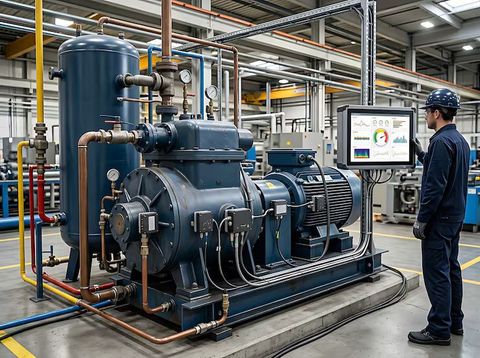
Refinery Machinery Information: Learn How Modern Refining Equipment Works
Refinery machinery includes the equipment used to separate, convert, treat, and move crude oil and other hydrocarbon feedstocks.
Modern refining equipment combines physical separation, chemical conversion, heat transfer, pressure control, and monitoring systems to produce usable petroleum products.
Understanding refinery machinery helps explain how crude oil moves through different processing stages. Equipment such as distillation columns, heat exchangers, reactors, pumps, compressors, and filtration systems performs specific roles within an integrated refinery process.
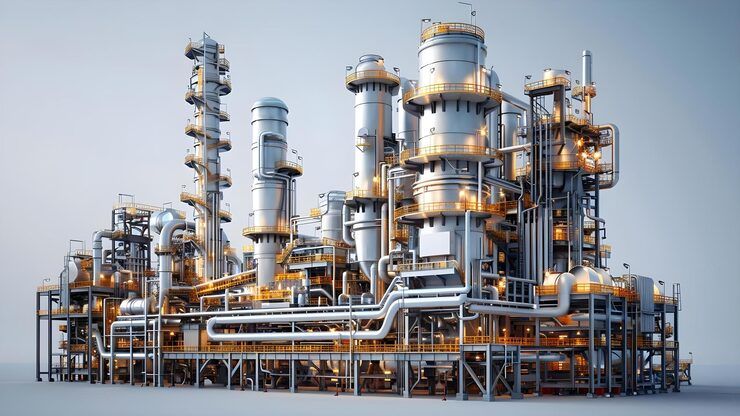
Context – What Refinery Machinery Is and How It Works
Refinery machinery refers to the mechanical and process equipment used in petroleum refining. A refinery receives crude oil or other feedstocks and processes them through several stages to separate components and modify their chemical properties.
The first major stage is usually crude oil separation. In an atmospheric distillation unit, heated crude enters a distillation column where components separate according to their boiling ranges. Lighter fractions rise toward the upper sections, while heavier fractions remain toward the lower sections.
Further processing can change the composition of these fractions. Common refinery processes include catalytic cracking, hydrocracking, reforming, alkylation, hydrotreating, and delayed coking.
| Equipment | Main Function | Typical Role |
|---|---|---|
| Distillation column | Separates hydrocarbon fractions | Primary separation |
| Heat exchanger | Transfers thermal energy | Heating and cooling |
| Reactor | Enables chemical conversion | Conversion and treatment |
| Pump | Moves liquids | Process circulation |
| Compressor | Raises gas pressure | Gas processing |
| Separator | Divides phases | Gas, liquid, and solids separation |
| Furnace | Provides process heat | Feed heating |
| Filter | Removes particles | Fluid treatment |
A refinery control system coordinates many of these machines. Sensors measure temperature, pressure, flow, composition, and other operating conditions so that process conditions can be monitored continuously.
Importance – Why Refinery Machinery Matters
Refinery machinery is important because refining involves large volumes of material moving through processes under controlled temperature and pressure. Reliable equipment helps maintain process continuity and supports consistent operating conditions.
Different machines also have different safety requirements. Pressure vessels, furnaces, pipelines, rotating equipment, and process reactors must be designed and operated according to applicable engineering and safety requirements.
Refinery machinery affects several groups, including:
- Refinery operators and process engineers
- Equipment and maintenance teams
- Environmental and safety personnel
- Energy and chemical industries
- Regulators and inspection authorities
- Communities located near refinery facilities
Equipment selection also depends on the feedstock and refinery configuration. Heavy crude, light crude, and feedstocks with different sulfur or contaminant levels can require different processing arrangements.
Recent Updates – Trends in Refining Equipment
Modern refinery machinery increasingly incorporates digital monitoring and automation. Industrial sensors, distributed control systems, advanced process control, and data analysis can provide more detailed information about equipment and process conditions.
One important development is predictive maintenance. Instead of relying only on fixed maintenance intervals, operators can analyze vibration, temperature, pressure, flow, and other measurements to identify changes that may indicate equipment degradation.
Energy efficiency is another major area of development. Heat integration allows energy released from one process stream to be transferred to another stream through heat exchangers and related systems.
Other developments include:
- More advanced process monitoring
- Digital equipment condition tracking
- Improved heat recovery systems
- Emissions monitoring technologies
- Automated inspection methods
- Improved corrosion monitoring
- Integration of process data with maintenance systems
Refineries are also adapting equipment and processes to changing fuel specifications and environmental requirements. The exact technologies used vary by refinery configuration, feedstock, product requirements, and applicable regulations.
Laws or Policies – Rules Affecting Refinery Equipment
Refinery operations are subject to multiple regulatory requirements because petroleum processing involves flammable materials, high temperatures, pressure systems, emissions, wastewater, and potentially hazardous substances.
In the United States, refinery facilities may be subject to requirements administered by the Environmental Protection Agency (EPA), including rules covering air emissions, hazardous pollutants, wastewater, and chemical risk management. Occupational safety requirements can also apply through the Occupational Safety and Health Administration (OSHA).
In India, petroleum refineries are subject to environmental and industrial regulations administered through relevant central and state authorities. Requirements can involve emissions, hazardous materials, environmental clearances, workplace safety, and pollution control.
Internationally, technical standards from organizations such as the American Petroleum Institute (API), International Organization for Standardization (ISO), and other engineering bodies are commonly referenced in refinery equipment design and operation.
Regulatory requirements can change over time. Refinery operators therefore need to consult the current rules applicable to their location, facility type, process configuration, and emissions profile.
Tools and Resources – Refinery Machinery Information
Several technical resources can help readers understand refinery machinery and refining processes.
Useful resources include:
- Process flow diagrams for understanding equipment relationships
- Equipment datasheets for technical specifications
- Heat and material balance documents for process analysis
- Maintenance records for equipment history
- Process simulation software for studying refinery operations
- Instrumentation diagrams for understanding measurement and control
- Regulatory databases for applicable environmental requirements
Engineering reference materials can also help explain distillation, heat transfer, fluid flow, reaction engineering, corrosion, and process control.
For beginners, studying the sequence from crude separation to conversion and treatment provides a useful introduction to how refinery machinery operates as an interconnected system rather than as individual machines.
FAQs – Refinery Machinery Information
What is refinery machinery?
Refinery machinery is the collection of equipment used to process crude oil and other hydrocarbon feedstocks. It includes separation, conversion, heating, cooling, pumping, compression, filtration, and control equipment.
What equipment is commonly used in an oil refinery?
Common equipment includes distillation columns, furnaces, heat exchangers, pumps, compressors, reactors, separators, storage systems, pipelines, filters, and process-control instruments.
How does a refinery distillation column work?
A distillation column separates hydrocarbon components according to differences in boiling behavior. Heated feed enters the column, and different fractions are collected at different locations according to their volatility.
Why are heat exchangers important in refineries?
Heat exchangers transfer thermal energy between process streams. They can be used to heat incoming materials, cool processed streams, and recover useful process heat.
How does automation affect refinery machinery?
Automation allows operators to monitor and control process variables such as temperature, pressure, flow, and level. Advanced systems can also analyze operating data and help identify changes in equipment condition.
Conclusion – Refinery Machinery Overview
Refinery machinery forms the physical foundation of modern petroleum processing. Distillation columns, reactors, heat exchangers, pumps, compressors, and control systems work together to separate and transform hydrocarbon feedstocks under controlled conditions.
Modern refining equipment increasingly combines mechanical engineering with sensors, automation, process control, energy management, and equipment monitoring.
Understanding the purpose of each machine provides a clearer view of the complete refining process. Regulations, feedstock characteristics, refinery configuration, and product specifications all influence how equipment is selected, operated, monitored, and maintained.
For anyone learning about refinery machinery, starting with separation equipment and then studying heat transfer, chemical conversion, fluid movement, and process control provides a practical foundation for understanding modern refinery operations.

Related Post...
Granulation Equipment Tips: Explore Efficient Processes and Important Equipment Features
Updated: September 17, 2026
Read More
Confectionery Equipment Guide: Explore Types, Uses, Processes, and Modern Technology
Updated: September 22, 2026
Read More
Pharmaceutical Machinery Guide to Production Equipment, Systems and Processes
Updated: September 21, 2026
Read More