Video Creation AI Facts: Discover Important Information About AI Video Technology
Video creation AI is changing how people plan, generate, edit, and refine digital video content. Modern AI video technology can transform written prompts, images, and other reference material into moving scenes, while some systems can also generate dialogue, sound effects, background audio, and visual elements.
Understanding video creation AI facts is useful for creators, educators, businesses, researchers, and general users. The technology is developing quickly, so it is also important to understand its capabilities, limitations, transparency requirements, copyright questions, and responsible-use considerations.
Context – Understanding Video Creation AI
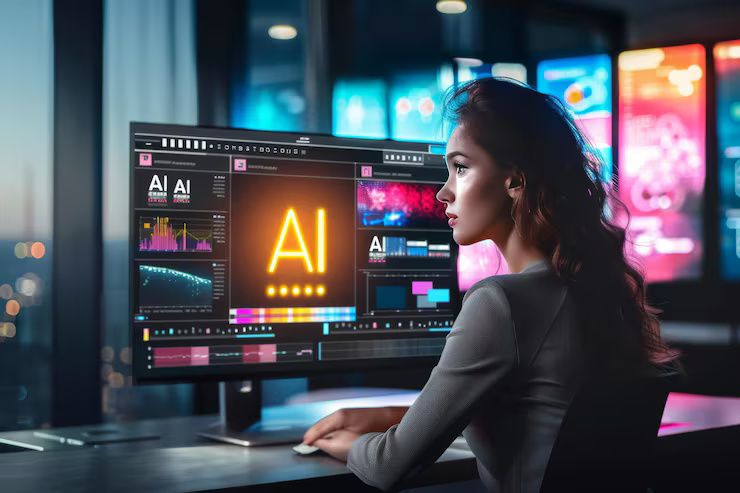
Video creation AI refers to artificial intelligence systems that generate or modify video through machine-learning models. A user may provide a text description, an image, a collection of reference images, or instructions for changing an existing scene. The system then predicts visual and, increasingly, audio content that matches those instructions.
Earlier generative video systems were mainly focused on producing short visual clips. Newer systems are expanding into areas such as character consistency, camera movement, image-to-video generation, dialogue, sound effects, vertical video, and higher-resolution output.
A simplified workflow can look like this:
| Stage | What AI Technology Can Do |
|---|---|
| Idea | Interpret a written concept or prompt |
| Planning | Generate scenes, characters, or visual concepts |
| Generation | Create short video sequences |
| Audio | Produce dialogue, sound effects, or background sounds |
| Editing | Modify selected visual elements |
| Verification | Add or inspect signals indicating AI generation |
Video creation AI does not necessarily replace conventional filmmaking. It can instead become one part of a broader workflow involving human planning, editing, fact-checking, cinematography, sound design, and review.
Importance – Why Video Creation AI Matters
The importance of AI video technology comes from its ability to shorten some parts of the content-development process and make sophisticated visual experimentation more accessible.
For example, a person can describe a scene instead of manually constructing every visual element. Educators may use generated scenes to explain concepts, while filmmakers can use AI-generated clips for visual exploration and story development.
Several groups are affected by these developments:
- Content creators experimenting with visual storytelling
- Educators developing explanatory materials
- Filmmakers exploring scenes and concepts
- Researchers studying generative media
- Businesses creating internal visual communication
- Audiences who increasingly encounter synthetic video online
However, AI-generated video can contain inaccurate details, inconsistent objects, unnatural movement, or misleading representations. Human review therefore remains important, especially when video is presented as factual information.
Another important issue is identity. AI systems can potentially reproduce the appearance or voice of real people. This creates questions involving consent, privacy, publicity rights, copyright, and digital impersonation.
Recent Updates – Trends and Developments
Video creation AI has advanced considerably during 2025 and 2026. Google announced Veo 3 in May 2025 with native generation of dialogue, sound effects, and background sounds. Google later introduced Veo 3.1 updates supporting reference-image workflows, improved character consistency, vertical video, and upscaling to 1080p and 4K in selected workflows.
Photo-to-video generation has also become an important development. Google reported in July 2025 that Veo 3 could transform photographs into eight-second video clips with sound.
Current developments can broadly be grouped into these areas:
- Text-to-video generation
- Image-to-video animation
- Reference-image generation
- Character consistency
- AI-generated dialogue and sound
- Vertical video formats
- Higher-resolution generation
- AI-content identification and provenance
Content authenticity is receiving greater attention as generation quality improves. Google says videos generated by its AI systems can include SynthID signals, including invisible digital watermarking, and its newer tools include video verification capabilities.
Another relevant development is C2PA, an industry standard for Content Credentials. Its April 2026 specification added an AI disclosure assertion designed to communicate machine-readable information about AI involvement in digital content.
These developments show that AI video technology is moving beyond simple text prompts toward more controlled, multimodal production workflows.
Laws or Policies – Important Rules to Understand
Rules governing AI-generated video vary by country and situation. Copyright, privacy, consumer protection, publicity rights, election rules, and platform policies can all become relevant.
In the European Union, Article 50 of the AI Act establishes transparency requirements for certain AI-generated and manipulated content. The requirements became applicable on 2 August 2026. In particular, certain AI-generated or manipulated content must carry machine-readable indications, while deepfakes must be disclosed as artificially generated or manipulated.
The European Commission published a Code of Practice on marking and labelling AI-generated content in June 2026. The code is voluntary, while the underlying AI Act transparency requirements are legally applicable in specified circumstances.
Copyright is another important area. The U.S. Copyright Office stated in its January 2025 report that AI-generated outputs may receive copyright protection when sufficient human creative expression determines protectable elements. Merely providing prompts does not, by itself, establish the required human authorship.
The U.S. Copyright Office has also examined digital replicas, including realistic AI-generated or manipulated video, images, and audio representing individuals. Its 2024 report recommended federal legislation addressing unauthorized digital replicas.
For practical use, people should consider:
- Whether people depicted in a video have provided appropriate permission.
- Whether source images, music, voices, or footage have appropriate rights.
- Whether AI-generated content needs disclosure.
- Whether local privacy, publicity, or consumer-protection rules apply.
- Whether a platform has additional content requirements.
Legal requirements can change, so specific projects should be checked against the applicable jurisdiction and current rules.
Tools and Resources – Useful Places to Learn
Several resources can help users understand video creation AI without relying only on generated explanations.
Google's documentation and announcements provide information about Veo, Flow, SynthID, and related generative-media developments.
The U.S. Copyright Office maintains its Artificial Intelligence initiative, including reports covering digital replicas, copyrightability, and AI training.
The European Commission's AI Act resources explain transparency requirements and provide guidance concerning AI-generated content.
C2PA documentation is useful for learning about Content Credentials, provenance information, and machine-readable AI disclosures.
When evaluating an AI video platform, useful questions include:
- What types of inputs does it support?
- Can it generate or modify audio?
- How consistently can characters and objects appear?
- Does it provide provenance or AI disclosure information?
- What limitations apply to generated content?
- How does it handle uploaded personal material?
FAQs – Video Creation AI Facts
What is video creation AI?
Video creation AI uses machine-learning models to generate or modify video from inputs such as text prompts, images, or reference material. Some modern systems can also generate synchronized audio.
Can AI create a complete video?
AI can generate individual scenes and, in some workflows, combine multiple elements into a larger production. A complete polished video may still require human planning, editing, review, narration, and fact-checking.
Can AI-generated video look realistic?
Yes. Modern models can produce increasingly realistic movement, lighting, environments, characters, and sound. However, errors such as distorted objects, inconsistent characters, or unnatural physics can still occur.
Is AI-generated video automatically copyrighted?
Not necessarily. Copyright rules differ by jurisdiction. In the United States, the Copyright Office has stated that human creative contribution can be important when determining copyright protection for AI-assisted outputs.
Should AI-generated videos be labeled?
In some situations, yes. Requirements depend on the country, type of content, and circumstances. For example, specific transparency requirements under the EU AI Act apply to certain AI-generated and manipulated content, including deepfakes.
Conclusion – Key Video Creation AI Facts
Video creation AI combines generative models with visual and audio production techniques to create or modify digital video. Recent developments include text-to-video, image-to-video, native audio generation, improved character consistency, vertical formats, higher resolution, and content-provenance technologies.
The technology also introduces important questions involving accuracy, copyright, consent, privacy, authenticity, and transparency. Understanding these issues helps users approach AI video technology as a developing digital-media tool rather than treating generated content as automatically accurate or authentic.
For educational and creative applications, human review remains an important part of responsible use. Users should also check applicable laws, platform rules, and disclosure requirements before publishing AI-generated video.

Related Post...

Industrial Automation Systems: Insights Into Robotics, Control Systems, and Sensors
Updated: September 07, 2026
Read More
Cybersecurity Introduction: Learn Online Protection and Security Basics
Updated: August 08, 2026
Read More