A Beginner’s Guide to Industrial Fasteners: Everything You Need to Know to Get Started
Industrial fasteners are mechanical hardware components that join two or more objects together securely.
Understanding the fundamentals of industrial fasteners is essential for anyone entering manufacturing, construction, automotive assembly, or mechanical maintenance.
Unlike permanent joining methods like welding or adhesive bonding, fasteners allow components to be assembled and disassembled without damaging the base materials. This comprehensive guide covers the core concepts, industry standards, recent trends, and practical resources to help beginners navigate the world of industrial fastening systems.
Context: Understanding Industrial Fasteners
An industrial fastener is any non-permanent mechanical device designed to hold parts together under varying loads, vibrations, and environmental conditions. Their primary purpose is to create strong, reliable joints that can withstand shear, tension, and compression forces while allowing future maintenance or component replacement.
Historical Background
The concept of threaded fasteners dates back to ancient Greece, where Archimedes developed the screw principle for water pumps and presses. During the Industrial Revolution in the 18th and 19th centuries, the invention of precision screw-cutting lathes enabled mass production. Standardized thread profiles, introduced by engineers like Joseph Whitworth and William Sellers, revolutionized machinery assembly by making parts interchangeable across factories.
Common Categories of Fasteners
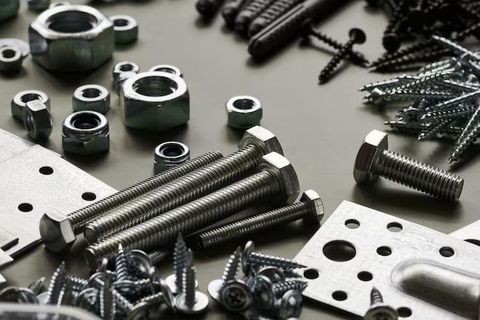
Industrial fasteners come in thousands of designs, each engineered for specific structural requirements:
Bolts: Threaded rods with a head, designed to pass through unthreaded holes and secure with a matching nut.
Screws: Threaded fasteners that create their own mating threads in the material or fit into pre-tapped holes.
Nuts: Internally threaded blocks that pair with bolts to clamp materials together.
Washers: Thin, flat discs placed under bolt heads or nuts to distribute load, prevent surface damage, and reduce loosening.
Rivets: Smooth cylindrical shafts with a head that are permanently deformed upon installation to join sheets of metal.
Studs and Anchors: Headless threaded rods and specialized inserts used to secure heavy equipment to concrete or masonry.
Importance of Industrial Fasteners
Though small relative to the machinery or structures they hold together, industrial fasteners play a critical role in mechanical integrity and operational safety. A single fastener failure in a bridge, aircraft, or pressure vessel can lead to catastrophic structural collapse.
Who Relies on Industrial Fasteners?
Virtually every physical industry depends on properly specified fastening hardware:
Civil and Structural Engineers: Rely on high-strength structural bolts to connect steel beams in buildings, bridges, and towers.
Aerospace and Automotive Technicians: Use precision, lightweight, and vibration-resistant fasteners to assemble engines, frames, and fuselages.
Manufacturing and Maintenance Teams: Depend on standardized hardware to assemble production line machinery and perform routine repairs.
Renewable Energy Developers: Utilize corrosion-resistant fasteners to anchor wind turbines and solar panel arrays against harsh weather.
Material and Coating Selection
Selecting the right fastener involves matching the material to the operating environment. Carbon steel provides high strength for general indoor applications, while stainless steel offers superior corrosion resistance for marine or chemical environments. Protective coatings such as zinc plating, hot-dip galvanizing, and phosphate finishes add extra barriers against rust and galling.
Recent Updates and Industry Trends
The industrial fastener sector continues to evolve alongside advancements in materials science, automation, and sustainable engineering. Manufacturers are developing smarter, lighter, and more durable fastening solutions to meet modern industrial demands.
Smart Fasteners and Sensor Integration
Modern industrial operations increasingly incorporate Internet of Things (IoT) technology directly into mechanical joints. Smart bolts embedded with micro-sensors can continuously monitor tension, temperature, and vibration levels in real time. Maintenance teams receive automated alerts when a joint begins to loosen, preventing unexpected equipment failure.
Lightweight Alloys and Advanced Composites
As electric vehicles and aerospace designs prioritize energy efficiency, reducing component weight has become a major focus. Fastener producers are expanding the use of titanium, high-strength aluminum alloys, and engineered polymers. These materials maintain high tensile strength while significantly lowering overall assembly mass.
Automated Assembly and Precision Torquing
Factories are adopting robotic fastening systems equipped with digital torque-and-angle controllers. These automated tools record exact tightening data for every single bolt installed on an assembly line. This level of traceability ensures consistent clamping force and eliminates human tightening errors.
Laws, Standards, and Regulations
Because fastener reliability directly impacts public safety, international organizations and government bodies enforce strict technical standards and legal regulations. Compliance ensures that a bolt produced in one country performs identically to one made elsewhere.
International Standards Organizations
Several global organizations publish detailed specifications for fastener dimensions, thread tolerances, and mechanical strength:
ISO (International Organization for Standardization): Establishes global metric fastener standards widely used across Europe, Asia, and international trade.
ASTM International: Develops material and mechanical testing standards, particularly for structural and petrochemical applications in North America.
DIN (Deutsches Institut für Normung): Provides foundational German engineering standards that remain influential worldwide.
SAE International: Defines grading systems and specifications for automotive and aerospace fasteners.
Fastener Quality Regulations
In the United States, the Fastener Quality Act (FQA) mandates that high-strength fasteners meet specific chemical and mechanical testing requirements. The law requires manufacturers and distributors to maintain lot traceability and accredited laboratory test reports. These regulations prevent counterfeit or substandard hardware from entering critical infrastructure, defense, and transportation systems.
| Standard System | Primary Region | Common Strength Grades | Typical Measurement Unit |
| ISO Metric | Global | Class 4.6, 8.8, 10.9, 12.9 | Millimeters (mm) |
| SAE | North America | Grade 2, Grade 5, Grade 8 | Inches (Imperial) |
| ASTM | North America | A307, A325, A490 | Inches and Metric |
Tools and Resources for Beginners
Working accurately with industrial fasteners requires both physical measurement instruments and reliable digital reference platforms. Beginners can use several accessible tools to identify, specify, and install hardware properly.
Essential Physical Measuring Tools
Thread Pitch Gauge: A pocket tool with serrated blades used to determine the exact spacing between screw threads.
Digital Caliper: A precision sliding gauge used to measure fastener diameter, length, and head thickness.
Calibrated Torque Wrench: A specialized wrench that applies a specific, controlled rotational force to achieve proper bolt tension.
Digital Calculators and Reference Platforms
Fastener Torque Calculators: Online engineering calculators (such as those hosted by Engineering Toolbox) help determine proper tightening torque based on bolt diameter, grade, and lubrication condition.
Thread Identification Charts: Downloadable reference tables from organizations like Bolt Depot and McMaster-Carr allow beginners to cross-reference metric and imperial thread sizes.
Standards Databases: The official portals of ISO, ASTM, and ASME allow engineers and students to search technical specifications and material classifications.
Frequently Asked Questions (FAQs)
What is the difference between a bolt and a screw?
A bolt is designed to pass through unthreaded holes in assembled parts and is tightened using a separate nut. A screw is designed to turn into a pre-threaded hole or form its own threads directly into the material without requiring a nut.
How do I read the markings on a bolt head?
Bolt head markings indicate the strength grade and material composition of the fastener. Imperial SAE bolts use radial lines (such as three lines for Grade 5 or six lines for Grade 8), while metric ISO bolts display numbers like 8.8 or 10.9 stamped directly onto the head.
Why is proper torque important when installing industrial fasteners?
Applying the correct torque stretches the bolt slightly, creating the clamping force needed to hold parts together securely. Under-tightening allows vibrations to loosen the joint, while over-tightening can stretch the bolt past its yield point and cause it to snap.
Can metric and imperial fasteners be used interchangeably?
No, metric and imperial fasteners use different measurement units and thread angles, meaning their threads do not align properly. Mixing them will strip the threads, damage the components, and create a weak, unsafe connection.
What causes industrial fasteners to loosen over time?
Fasteners commonly loosen due to continuous mechanical vibration, thermal expansion and contraction, or improper initial tightening. Using lock washers, nylon-insert lock nuts, or chemical thread-locking compounds helps prevent rotational loosening.
Conclusion
Industrial fasteners are foundational components that keep modern machinery, vehicles, and infrastructure safely assembled. Understanding basic fastener types, strength grades, and international standards equips beginners to select the right hardware for any mechanical task. As smart sensors, lightweight alloys, and strict quality regulations continue to shape the industry, proper fastening knowledge remains an indispensable technical skill.

Related Post...


Chemical Manufacturing Resources: A Complete Guide to Equipment, Processes, and Industry Standards
Updated: October 12, 2026
Read More
A Beginner’s Guide to Industrial Fasteners: Everything You Need to Know to Get Started
Updated: November 17, 2026
Read More